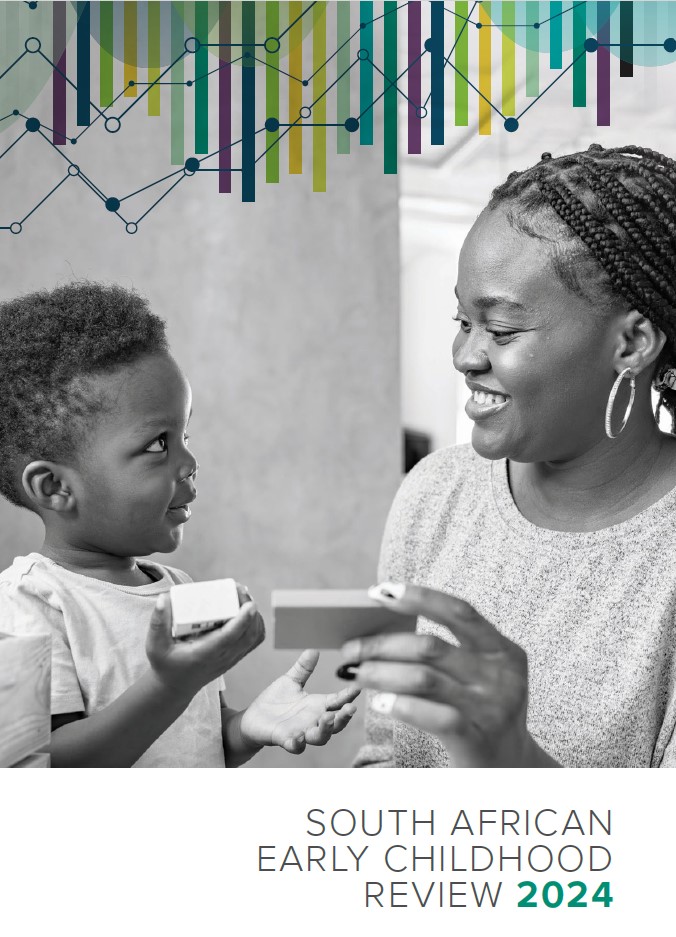
 The SAECR 2024 tracks trends on the status of children under 6.


 Health
Definition
This indicator shows the prevalence of HIV that is measured in a national survey of women attending public-sector antenatal clinics for the first time in their current pregnancy. The data are derived from the Department of Health's antenatal HIV prevalence surveys. Weighted population numbers are not available for all years, and the standard disaggregations for children do not apply to this indicator.Data
Source
Department of Health (2001 - 2024) National Antenatal HIV and Syphilis Prevalence Surveys 2000-2022. Pretoria: DoH.
Notes
Sample surveys are always subject to error, and the proportions simply reflect the mid-point of a possible range. The confidence intervals (CIs) indicate the reliability of the estimate at the 95% level. This means that, if independent samples were repeatedly taken from the same population, we would expect the proportion to lie between upper and lower bounds of the CI 95% of the time. The wider the CI, the more uncertain the proportion. Where CIs overlap for different sub-populations or time periods we cannot be sure that there is a real difference in the proportion, even if the mid-point proportions differ. CIs are represented in the bar graphs by vertical lines at the top of each bar.
What do the numbers tell us?
The HIV status of pregnant women is vitally important for children, and HIV continues to be a major contributor to both maternal and child mortality. An inquiry into reported maternal deaths between 2012 and 2013 found that of the 87% of women who died and whose HIV status was known, 65% were HIV-positive.[1] This number dropped subsequently, to 40.5% in 2021, although HIV status was not known for another 12% of mothers who died.[2] HIV-negative deaths outnumbered HIV-positive deaths - a switch from what was found in the pre-lockdown years of 2017-19.
Of all children who died in hospital between 2012 and 2013, only 35% were known to be HIV-negative. Twenty-two percent were HIV-exposed, and a further 18% were HIV infected. The HIV status of the remaining 14% of children was not known.[3]The HIV prevalence amongst pregnant women is the proportion of pregnant women (aged 15 – 49 years) who are HIV positive. The majority of children who are HIV positive have been infected through mother-to-child transmission. Therefore, the prevalence of HIV amongst infants and young children is largely influenced by the HIV prevalence of pregnant women and interventions to prevent mother-to-child transmission (PMTCT).
The PMTCT programme had a notoriously slow start in South Africa, with only an estimated 7% of pregnant women receiving HIV counselling and testing in 2001/02. Following legal action by the Treatment Action Campaign, the Department of Health was ordered to make PMTCT services available to all pregnant women, and testing rates increased rapidly in subsequent years. Since 2009 HIV testing has been almost universal.[4] An evaluation of the PMTCT programme showed that transmission rates had declined to as low as 2.6% by 2013.[5]
HIV prevalence is measured in the National HIV and Syphilis Prevalence Survey which targets pregnant women aged 15 – 49 years who attend a public health facility. The most recent publicly available estimate, for 2022, is a prevalence rate of 27.5%. HIV prevalence rates increased rapidly from 1% in 1990 when the first antenatal prevalence survey was conducted, to 25% by 2000 and 30% in 2005. The prevalence rate remained at around this level until 2019, after which it dropped slightly
Results are reported in five-year age bands. For many years, HIV-prevalence rates were consistently highest amongst women in their 30s (reaching a prevalence rate of 43% in 2013) followed by those in their late 20s & 40s. Since 2014, prevalence rates among women under 35 years have declined, while those among older women have increased. In 2022, the highest HIV prevalence rates among first ante-natal visit attendees was in the 40-44 year age group.
HIV prevalence rates have remained comparatively low amongst youth (15-24 years) and have continued to decline steadily. In 2022, the prevalence rate among 20-24 year-old pregnant women were 16.4% (down from 24.2% in 2012), while prevalence among 15-19 year-olds was 7.6% (down from 12.7% a decade earlier).
There are substantial provincial differences in HIV prevalence. KwaZulu-Natal has consistently had the highest antenatal HIV rates, with prevalence in excess of 36% since 2000 and over 40% between 2013 and 2019. In contrast, the Western Cape has had relatively low prevalence, although the rate increased by ten percentage points to 19% over the 14-year period after 2000 before dropping back to 16% in 2022. Other provinces with relatively low HIV prevalence are the Northern Cape and Limpopo, with HIV-prevalence levels at 15% and 19% respectively in 2022.
These inter-provincial differences are partly a reflection of differences in HIV prevalence between different racial and cultural groups. For example, male circumcision is believed to be a major factor explaining inter-regional differences in HIV prevalence within Africa,[6] and its prevalence differs substantially between South Africa’s provinces.[7] Other factors such as differences in urbanisation, migration, socio-economic status and access to HIV-prevention and treatment services could also explain some of the differences in HIV prevalence between provinces.
Although HIV testing is almost universal in public health facilities, the antenatal prevalence survey does not include pregnant women who attend private health facilities, or women who deliver at public health facilities without having made a booking visit. Women with higher socio-economic status (proxied by post-secondary levels of education) and those seeking antenatal care in the private health sector have a relatively low prevalence of HIV.[8] Thus the surveys, which are conducted only in public health facilities, are likely to over-estimate HIV prevalence in pregnant women generally.
[1] Department of Health (2014) Saving Mothers 2011 – 2013: Sixth Report on Confidential Enquiries into Maternal Deaths in South Africa. Pretoria: DoH.
[3] Harper K (2016) An overview of child PIP data 2012 – 2013. In: Stephen CR (eds) Saving Children 2012 – 2013. An eighth Survey of Child Healthcare in South Africa. Pretoria: Tshepesa Press, Medical Research Council & Centers for Disease Control and Prevent
[6] Auvert B, Buvé A, Ferry B, Caraël M, Morison L, Lagarde E, Robinson NJ, Kahindo M, Chege J, Rutenberg N, Musonda R, Laourou M & Akam E (2001) Ecological and individual level analysis of risk factors for HIV infection in four urban populations in sub-Sahararan Africa with different levels of HIV infection. AIDS, 15(Suppl 4): S15-30
Williams BG, Lloyd-Smith JO, Gouws E, Hankins C, Getz WM, Hargrove J, de Zoysa I, Dye C & Auvert B (2006) The potential impact of male circumcision on HIV in Sub-Saharan Africa. PLoS Medicine, 3(7): e262.
Maughan-Brown B, Venkataramani A, Nattrass N, Seekings J & Whiteside A (2011) A cut above the rest: Traditional male circumcision and HIV risk among Xhosa men in Cape Town, South Africa. Journal of Acquired Immune Deficiency Syndrome, 58(5): 499-505.
Williams BG, Lloyd-Smith JO, Gouws E, Hankins C, Getz WM, Hargrove J, de Zoysa I, Dye C & Auvert B (2006) The potential impact of male circumcision on HIV in Sub-Saharan Africa. PLoS Medicine, 3(7): e262.
Maughan-Brown B, Venkataramani A, Nattrass N, Seekings J & Whiteside A (2011) A cut above the rest: Traditional male circumcision and HIV risk among Xhosa men in Cape Town, South Africa. Journal of Acquired Immune Deficiency Syndrome, 58(5): 499-505.
[7] Connolly C, Simbayi LC, Shanmugam R & Nqeketo A (2008) Male circumcision and its relationship to HIV infection. South African Medical Journal, 98(10): 789-794.
[8] Johnson L, Dorrington R, Bradshaw D, du Plessis H & Makubalo L (2009) The effect of educational attainment and other factors on HIV risk in South African women: Results from antenatal surveillance, 2000 – 2005. AIDS,23(12): 1583-1588.
Bärnighausen T, Hosegood V, Timaeus I & Newell M (2007) The socioeconomic determinants of HIV incidence: Evidence from a longitudinal, population-based study in rural South Africa. AIDS, 21(Suppl 7): S29-S38.
Wilkinson D (1999) HIV infection among pregnant women in the South African private medical sector. AIDS, 13(13): 1783.
Bärnighausen T, Hosegood V, Timaeus I & Newell M (2007) The socioeconomic determinants of HIV incidence: Evidence from a longitudinal, population-based study in rural South Africa. AIDS, 21(Suppl 7): S29-S38.
Wilkinson D (1999) HIV infection among pregnant women in the South African private medical sector. AIDS, 13(13): 1783.
Technical notes
The surveys are conducted in October of each year. The 95% confidence intervals reflect the random variation in prevalence, as well as the variation attributable to the stratified cluster sampling methodology.
Strengths and limitations of the data
South Africa’s antenatal clinic data are among the best in Africa. In most other African countries, HIV-prevalence levels are reported in individual clinics or districts, and there is no attempt to draw a nationally representative sample of clinics from which national antenatal clinic prevalence rates can be calculated. This Department of Health survey follows a stratified cluster sampling methodology, with clinics being sampled on a probability proportional to size basis. The overall sample sizes are very large, at around 30,000, making this HIV-prevalence dataset one of the largest in the world.
The survey is conducted among pregnant women who attend public health antenatal clinic services during pregnancy. It does not include pregnant women who attend private health facilities, or women who deliver at public health facilities without having made a booking visit. Women seeking antenatal care in the private health sector have a relatively low prevalence of HIV, and thus the surveys over-estimate HIV prevalence in pregnant women generally. It would also be expected that there would be differences in sexual behaviour between pregnant women and non-pregnant women, and the levels of HIV prevalence observed in the antenatal clinic surveys should therefore not be seen as representative of those in the general female population. After controlling for age differences, HIV prevalence in pregnant women tends to be substantially higher than that in women in the general population.
It should also be noted that – in accordance with UNAIDS guidelines – women are tested using a single ELISA antibody test, and there is no confirmatory testing of positive specimens. This may bias the results slightly, as the test can produce false positive results in a small proportion of HIV-negative women. Although this bias is generally thought to be of minimal significance when the population prevalence exceeds 10%, recent South African studies have suggested that the false positive rate could be around 2%.11 This would imply over-estimation of the true HIV prevalence in pregnant women by about 2%.
Supported by


Previous Funders


46 Sawkins Road
Rondebosch, 7700
South Africa
Tel: +27 (0)21 650 1473
Email: info.ci@uct.ac.za